The Viral Blueprint · by Noah & André, owners of ninesixfits
Think like a viral creator.
Real talk: we're not selling you tricks here. Tricks are dead in two weeks. We're showing you how we think about viral videos — the exact thing that took ninesixfits past 102M views in 365 days. No luck. A brain that ticks differently.
Most people copy whatever's working right now and then wonder why it doesn't hit. At some point we stopped asking "what's working right now?" and started asking "why does that work?". From that moment on, everything changed. By the end of this guide, you'll look at any viral video and instantly know why it works — and how to do it better in your own style.
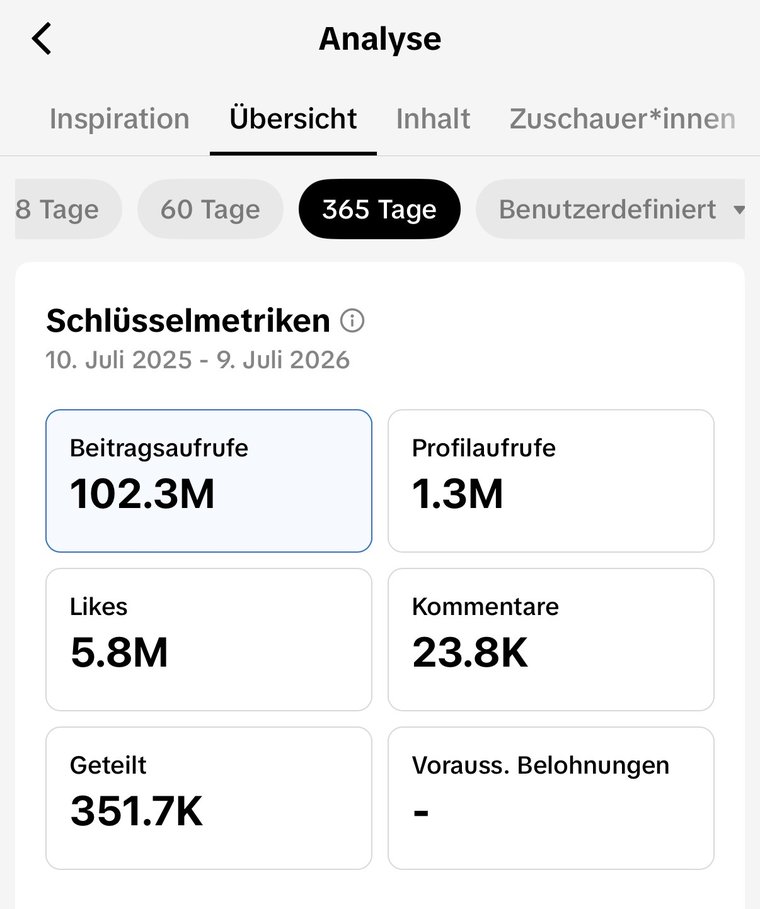
How the guide is built
Three things run through every chapter: our story (what actually happened in a real year of content — the fails included), the psychology (why people tick the way they tick) and the systems (what you actually do). At the end of every chapter there's a clear task. No fluff, no filler.
One more thing: don't just read this and nod along. Get in it. The difference between "nice to know" and "changed my life" is that you actually do it. Deal? Let's go.
Chapter 01
Stop copying
The biggest difference between people who break through and people who stay stuck forever isn't talent and it isn't expensive gear. It's a single question.
Most people ask: "What's working right now?" We ask: "Why is that working right now?" Sounds like a tiny difference, but it's the whole guide in one sentence. Because "what's working right now" always has an expiry date. "Why it works" doesn't.
Honestly — in the beginning we got it just as wrong as everyone else. A sound goes viral? We use it. A cut is trending? We copy it. And the result was… exactly what you'd think: mediocre videos that looked like a thousand others. The penny only dropped when we stopped copying the visible stuff and started understanding the invisible stuff: why does someone stop? Why do they stick around? Why do they send it to their buddy?
Copying makes you a worse version of someone else. Understanding makes you the original.
End of the free preview
This is where it gets serious.
That was the warm-up. Behind here wait all 10 chapters — psychology, retention, the experiment system and your 90-day plan.
Get the course — €39 →Already bought? Open the link in your confirmation email — the course unlocks automatically.
The copy trap
When you copy a format, you're automatically too late. The trend has already peaked, the feed is full of it, and your video is just the weaker copy of an original. And the worst part: you learn nothing from it. You've got a video, but no principle. Next trend, you're back at zero again. Exhausting, right?
Understanding works the other way around. Once you get that a format works because it plants an open question in your head in the first second — then that principle is yours. Forever. You can unleash it on a hundred new videos. In your niche. With your face. On your topic.
Take a viral video that stopped you. Ask "why" five times:
- Why did I stop? → The first frame was unusual.
- Why was it unusual? → It contradicted an expectation.
- Why did I stick around? → I wanted to know how it ends.
- Why did I want that? → An open loop in my head that wants to close.
- Why did I share it? → It said something about me.
At the end of that ladder you're not holding a copy — you're holding a principle you can apply anywhere. That's the raw material we build everything from here.
Today, grab three viral videos from a completely unfamiliar niche and run them through the Why-Ladder. An unfamiliar niche because there you won't be tempted to copy — you only see the naked mechanics. Write down the three principles.
Chapter 02
First the stop, then everything else
The best info in the world does nothing for you if nobody sticks around long enough to hear it. Attention first. Then everything else. Always in that order.
For us, this is the most important rule in the whole guide. Every feed is an endless stream, and your video isn't fighting the other videos in your niche — it's fighting everything. Friends, music, the next swipe. The thumb is the toughest opponent in the world, and it couldn't care less about your hard work.
The first second isn't a second
The "do I stay or do I swipe" decision happens faster than you think — in the first frame, often before you've even said anything. Meaning: your hook doesn't start with what you say, it starts with what people see and hear before you open your mouth. Image, movement, your face, the first sound — that's the real hook. Not the sentence.
The really good videos fire several of these at once. The weak ones rely on the word hook alone — and lose half the people before the sentence is even over.
Nobody listens to you until they've stopped. So earn the stop first.
The open loop
Our favorite tool for attention is the open loop. Your brain hates unfinished things — it wants the resolution. If you raise a question in the first second whose answer only comes later, you hold the viewer. Not by persuading them, but through a reflex they can barely resist.
- Question: "The reason your videos flop isn't the algorithm."
- Contradiction: "Stop making good videos." (Huh? → Now I need to know.)
- Promise with a countdown: "Three things — and the third one changed everything for us."
For your next video, write five different hooks before you even turn the camera on. Only then do you pick one. If you've only got one hook, you didn't choose one — you just settled for the first thing that came to mind. And "settling" doesn't cut it here.
Chapter 03
Why people share
You get views through attention. You get reach through emotion. If you want people to share your video, you have to understand why people share in the first place.
A video doesn't go viral because it's "good". It goes viral because it makes someone do something — comment, save, send it to a homie. And every one of those actions is emotion. Neutral stuff gets consumed and instantly forgotten. Emotional stuff gets passed on. That simple, that brutal.
Why people really share
Here's the thing most people never get: people don't share because of you. They share because of themselves. Every shared piece of content is a statement about the person sharing it. Understand these motives, and you understand reach:
Before you make a video, ask yourself one single question: Why would anyone share this? If you don't have a clear answer — nobody's going to share it. That's not pessimism, it's just the filter that weeds out bad ideas before they steal your time.
The strongest lever: "How do you know that?"
The most powerful emotion for organic reach is identification — that "yo, how do you know that?" feeling. When a video nails an experience exactly, one you never managed to put into words yourself, you feel understood. And being understood is rare. Rare gets shared.
Felt gets shared. Neutral gets forgotten. Always build for the feeling.
A fit check that just shows an outfit is info. A fit check that hits the moment you first feel really good in your clothes — that's identity. The first gets views. The second gets shares. Build for the second.
Take your last five videos and assign each one a share reason from above. Can't think of a single one for one of them? Then you now know why nobody shared it. Deliberately build your next video around exactly one of these reasons.
Chapter 04
Better beats new
Our breakthrough didn't come from some genius new idea. It came from taking a format that was already working — and making it better in one decisive spot. That was it. No secret, no magic.
Hopefully that takes a ton of pressure off you. Because you don't have to be "original". Originality is completely overrated. Improving is completely underrated. Most viral videos aren't new — they're just the best version of something that already existed.
Why better beats new
A format that's already working has passed the most expensive test: it's proven people want to watch it. When you start from zero, you have to prove the idea and the demand at the same time. When you improve a format that already works, the demand is free — you just have to top the execution.
The 10% rule
You don't have to reinvent a format to own it. Making it 10% better is enough — a sharper hook, a more satisfying payoff, a clearer message. Those 10% are the difference between "seen it before" and "wait, that's the best version of this". And guess what the algorithm rewards: the best version. Not the first.
Don't reinvent the wheel. Just build the round one while everyone else is rolling on square ones.
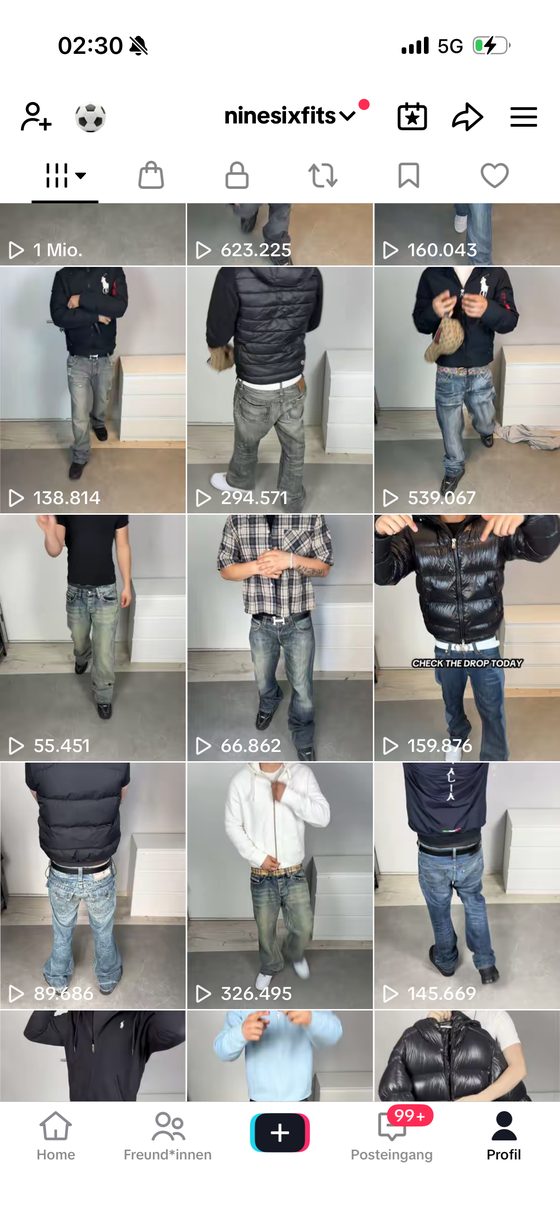
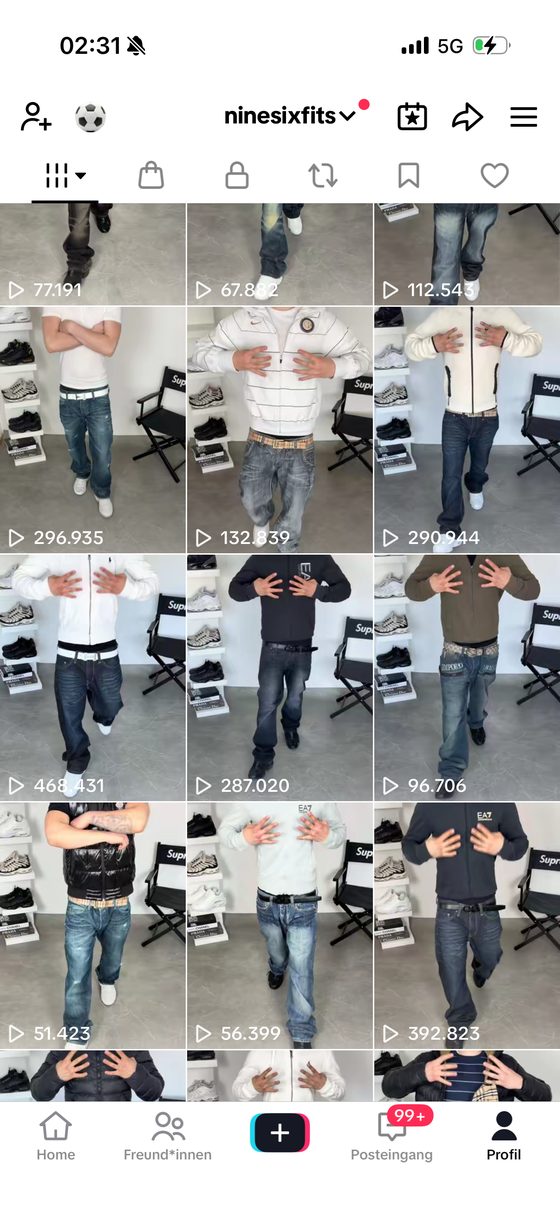
Improving doesn't mean: the same video, just with your face. Improving means: the same mechanics, but with a clearly recognizable improvement in one specific spot. If your version is interchangeable, you copied. Period.
Find a format that's currently running in your niche. Break it down into the four parts above. Name the one weak spot. Your next video is exactly that format — just with that weak spot fixed.
Chapter 05
Make the trend yours
A trend you copy 1:1 makes you interchangeable. A trend filtered through your lens makes you unmistakable. Same starting material, completely different result.
Trends are just vehicles — they carry attention. But if you only ride along, the attention arrives, finds nothing that's yours, and drives on to the next one. The trend gives you the reach; you decide whether any of it sticks.
The translation formula
Every trend has a structure (the thing that makes it work) and a surface (the sound, the pose, the specific execution). Steal the structure. Swap the surface for your own world.
Example: the format "things nobody told you about X". The structure is open loop + insider knowledge. A fashion creator, a chef and a founder can all take the exact same structure — and build three completely different, unmistakable videos out of it. Same structure, own surface. That's how simple the trick is.
Copying makes you visible for a day. Translating makes you recognizable for years.
The recognition test
With every trend video, ask yourself: If I take away my name, my face and my logo — would anyone still recognize me? If not, you copied the surface instead of putting on your lens. Recognizability is the compound interest of content: every video pays into the picture people have of you in their heads. And that picture is, in the end, your biggest asset.
Take a current trend. Write its structure in one sentence. Then list three things from your world that could fill that structure. Congrats — you just turned one run-of-the-mill trend into three unmistakable videos.
Chapter 06
Every second counts
Retention isn't a trait a video just has. Retention is the result of hundreds of tiny decisions — each one there to make the viewer want to watch the next second too.
The algorithm is basically just an attention meter. It rewards videos people watch to the end and ideally rewatch from the top. Your job isn't to "beat the algorithm" — forget that. Your job is to build a video that holds the viewer in every second. Do that, and the algorithm works for you all on its own.
Learn to read your curve
Every platform shows you where people drop off. That's the most honest feedback you'll ever get — more honest than any comment, any friend, any gut feeling. Drop at second 2? Weak hook. Drop in the middle? There was a second without a reason. Gentle decline to the end? You're good. Look at that curve after every video. It never lies.
The one-second question
Go through your video second by second and ask at every one: "Does this second give me a reason to watch the next?" If not — cut it. The most brutal and best edit is deleting. Dead space — pauses, warming up, "um", too long an intro — is the most common reason really good ideas flop. Movement and pace hold the eye. Standing still loses it. Be ruthless when you cut.
A video isn't time you fill. It's a chain of moments, each one having to earn the next.
Take your last video and cut 20% of the length without losing content — just dead space. Then open the retention curve of your best and your weakest video and find the one difference. That'll tell you more than any YouTube tutorial.
Chapter 07
Test like a scientist
This is where "post content and hope" turns into a real system. Test formats over 2–3 weeks. Then look at what happened, make it better, repeat. Sounds unspectacular — but it's exactly the part almost nobody follows through on.
A single video tells you almost nothing. It can flop or fly for a thousand reasons — timing, luck, the feed's mood that day. A single result is noise. Only a series becomes a real signal. That's why we don't test videos, we test formats — and we test them long enough that luck doesn't stand a chance.
What a "format" actually is
A format is a repeatable structure you can vary without it losing its identity: a certain kind of hook, a certain build, a certain topic pattern. When you run a format consistently for 2–3 weeks, you isolate one variable — and the data that comes back then really belongs to the format and not to luck.
Reading the right numbers
Views are an ego number. They tell you that something happened, not why. The honest signals sit deeper:
- Retention measures your hook and your pace. The foundation of everything.
- Shares measure real impact — the strongest growth lever there is.
- Saves measure usefulness — people want to find it again.
- Comments measure whether you triggered a reaction — read what they write, not just how many.
A video is an opinion. A series is proof. Collect proof, not opinions.
Don't analyze every day — it just makes you anxious and it's only noise anyway. Analyze once a week. At the end of every week: which video did best and why? Which one thing do you take into the next week? One insight a week is 52 improvements over the year. That's not a sprint, that's compound interest.
Frame a format hypothesis as a full sentence. Commit to 10 videos of that format over the next two weeks. Measure only retention and shares. At the end you decide: double down, refine or throw away. No excuses.
Chapter 08
Consistency beats talent
For over a year we posted every single day. Not because volume automatically brings growth — but because volume brings data. And data is the raw material for everything we talk about here.
There's this misconception about consistency: most people think it's about feeding the algorithm with volume. The real reason is a different one. Every video is an experiment. Post once a week and you run 52 experiments a year. Post daily and you run 365. At the same learning rate per video, the second person learns seven times faster. Let that sink in. Consistency isn't a busywork chore — it's your learning speed.
Post a lot without burning out
Posting daily only works if not every video starts from zero — otherwise you're done in two weeks, we know that one. The secret isn't more effort. It's systems: shooting videos in blocks (several in one day), an idea stash (never sit in front of a blank page) and reusable formats (structure's set, only the content changes). That's how you push the cost per video down without pushing the quality down.
Talent decides how good your tenth video is. Consistency decides how fast you get to your thousandth.
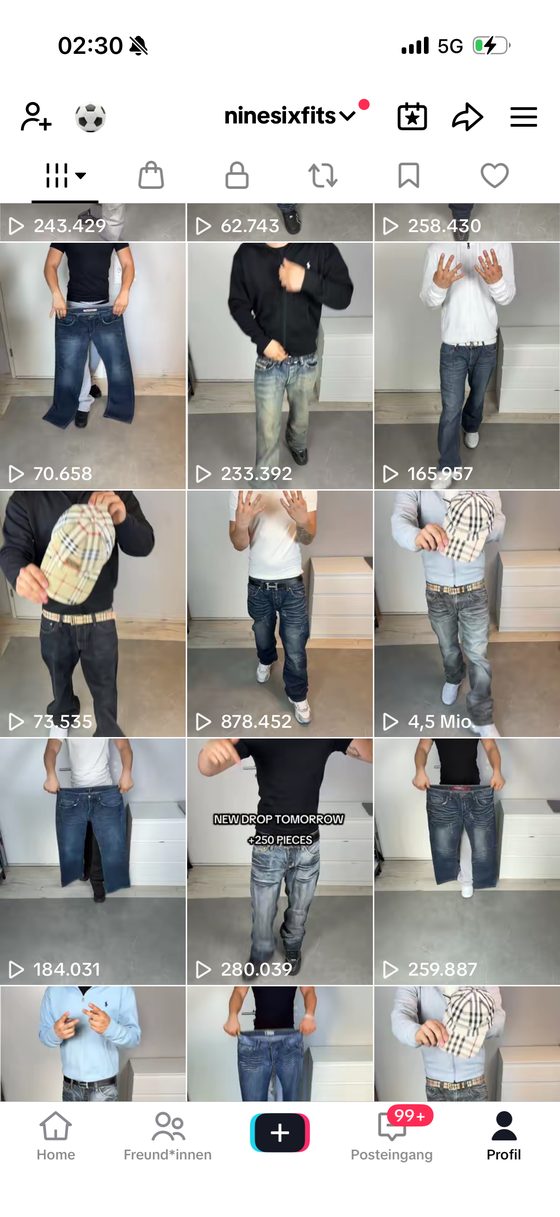
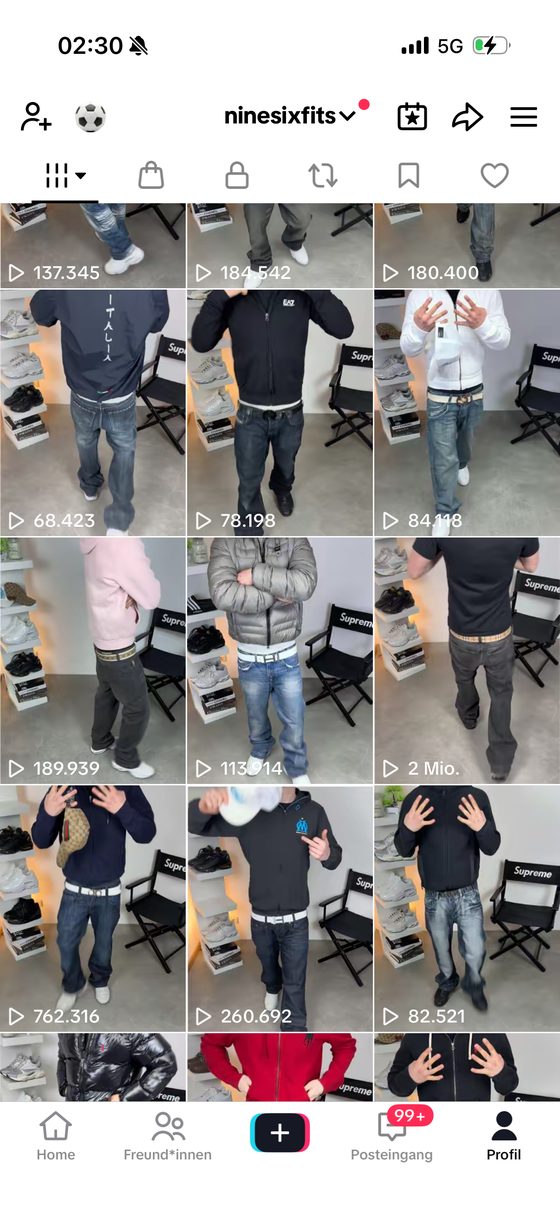
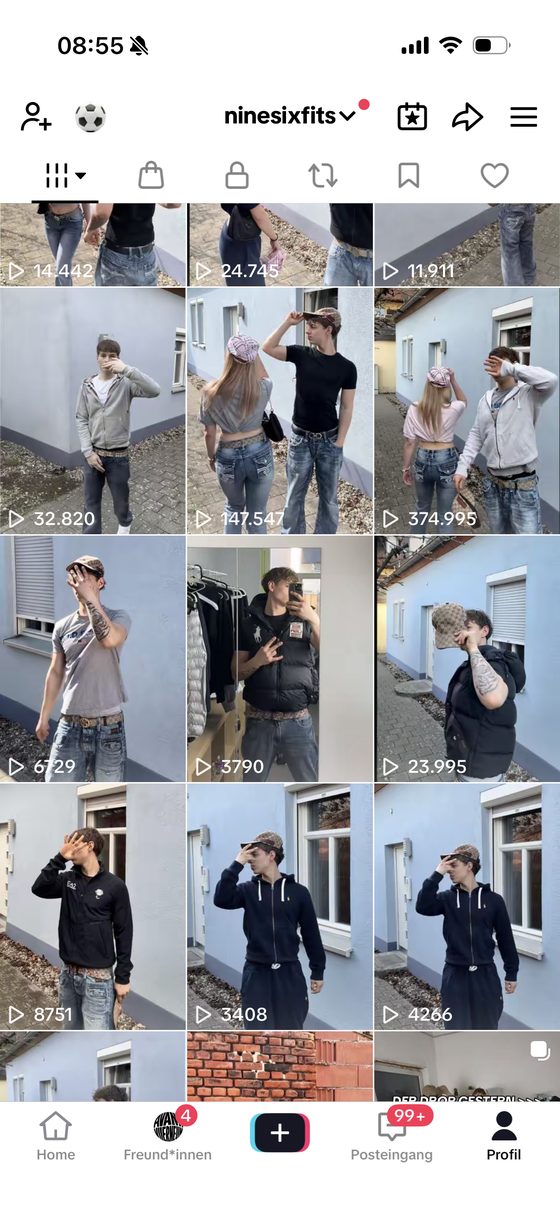
And so you get one thing straight: for us this was not a "worked from day 1" thing. This is what our first weeks looked like — videos with a few hundred to a few thousand views. Sometimes 340. We kept going every day anyway. That's exactly the point.
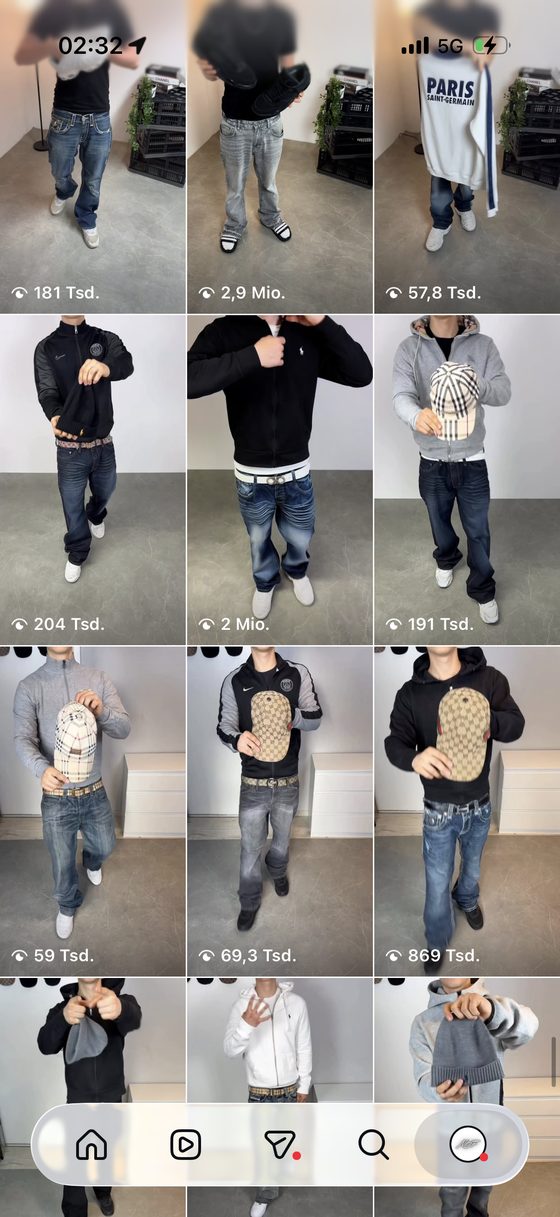
Same profile, same niche — just a year of consistency in between. From 561 followers to millions of views.
Where it all comes together
Consistency without analysis is just busywork — you repeat the same mistakes, only faster. Analysis without consistency is just theory — you've got no data to analyze. Both together make the learning loop, the heart of this whole guide: post → measure → learn → improve → post. Whoever spins that loop for a year is a completely different creator at the end. Promise. That's exactly what happened to us.
Build your idea bank today (a notes app is plenty) and fill it with 20 entries. And set a fixed weekly slot — 30 minutes, same day, every week. That's the base everything else runs on. Without it, it doesn't work.
Chapter 09
Look premium without spending premium
Quality matters — but quality doesn't mean an expensive camera. Quality means clarity, intent and perceived value. So: signals that tell the viewer in a split second "this one's worth it".
People judge value in a flash, long before they've even understood the content. Clean image, good light, clear sound, readable text, a thought-through edit — that's not cosmetics. Those are trust signals. They say, subconsciously: this person knows what they're doing. And trust is the prerequisite for someone to stay, share and follow you.
Perceived quality > budget
The best part: perceived quality costs almost nothing once you know what matters. Light matters more than the camera. Sound matters more than the image. Clarity matters more than effects. A video shot on a phone by the window with clean sound beats an expensively produced video with bad audio — every time. We made our first viral videos on a phone. No studio, no budget.
You don't have to look expensive. You have to look like you put in effort. And people see that instantly.
The premium feel
Premium isn't a price — it's a feeling of care. The same idea this guide is designed around (lots of white space, big headlines, one thing per page, nothing excessive) applies to your content. Less, but better. One clear thought, cleanly executed, beats five thoughts thrown together in a rush. Reduction is a quality signal — dare to leave things out.
Improve exactly one quality signal today — turn toward the window (light) or bring the sound closer. Just one. Then compare the result to your last video. You'll see the difference right away.
Chapter 10
Your 90-day plan
Knowledge without action is just entertainment. This last chapter turns everything you've learned into a simple machine — 90 days to get it running, and after that it runs forever.
The core is a loop. No secret, no rocket science — a loop you spin over and over. That's exactly how we built ninesixfits, and that's exactly how it'll work for you:
That's it. No single format lasts forever — the loop does. While your winner racks up views, you're already hunting the next one in the background. That way you never run dry and never depend on a single format.
Most people chase the one big hit. We build a machine that hits again and again.
Phase 1 — Foundation (Day 1–30)
Before the loop pays off, you need reps and first data. The first month is a warm-up — the goal isn't growth, it's losing the fear of posting.
- Set up an idea bank with 20+ entries (Chapter 8).
- Post daily for 30 days — consistency over perfection.
- Write 5 hooks for every video before you film (Chapter 2).
- Lock in light and sound — your baseline quality signal (Chapter 9).
- Introduce your fixed weekly check (Chapter 7).
Phase 2 — Spin the loop (Day 31–90)
Now you run the loop from the top — and then just keep spinning it.
- Pick 2–3 formats and test each as a series over 1–3 weeks.
- Track only retention and shares, not views (Chapter 7).
- Pick the winner — or the two best — and improve it (Chapter 4).
- Keep the winner running and at the same time push 2–3 new formats into testing.
- Translate trends through your lens — never copy (Chapter 5).
After day 90 — just keep spinning
There's no finish line. From here you keep doing what works and always have 2–3 new formats in testing. Keep the winners, drop the weak ones, add new ones to test. The same loop forever — just with better numbers.
And be honest with yourself: the 90 days get the machine running — but until every video really hits, it can take a while. For us it took nearly a year. For you maybe faster, maybe longer — doesn't matter. The plan doesn't change: you just keep spinning the loop. Whoever sticks with it long enough wins. More on that at the end.
In 90 days you won't become a different person. But you'll become a different creator — one with a machine instead of a hope.
Pick your first 2–3 formats right now and block one fixed day a week in your calendar to spin the loop: What ran? What gets dropped? What new thing goes into testing? The plan only works if you actually close the loop. So do it — today, not "someday".
To wrap up
The one principle behind all the principles
If you boil the whole guide down to one sentence, this is what's left: stop copying results. Start understanding causes.
Every chapter was a variation of that one thought. First the stop — because you understand the cause of reach. Better beats new — because you isolate the cause of success. Testing and analyzing — because you separate cause from luck. Trends, emotion, quality, consistency — all causes you now steer deliberately instead of hoping for them.
The algorithm will change. Platforms come and go. Formats that hit today are dead in a year. But human attention, emotion and identification — those don't change. That's exactly what you've now built on. That's why this guide won't age, while the "5 hooks for 2026" videos are trash in two weeks.
Trends give you a day. Principles give you a career.
You've got the tool in your head now. The only step still missing is the one nobody can take for you: start, post, measure, improve — and don't let the loop break. Day 1 is today. Not Monday, not next month. Today.
The honest part
And because nobody else will tell you: this is a long road. We didn't flip a switch in two weeks — we simply showed up every single day. Tested, improved, tested again. When the moment comes where it really takes off is different for everyone. For us it took nearly a year before basically every video went viral.
We always say: One year can change everything. Not just on TikTok — in life in general. One year consistently on one thing, and you won't recognize yourself. Most people quit after three weeks and then tell everyone it "just doesn't work".
So the most important thing to close on: never give up. Don't listen to the people laughing because you "post TikToks now". In a year they'll be sitting exactly where they sit today. You won't. Just do your thing — every day, no matter what anyone says.
One year can change everything. You just have to push through the twelve months most people quit after three weeks.
Who we are
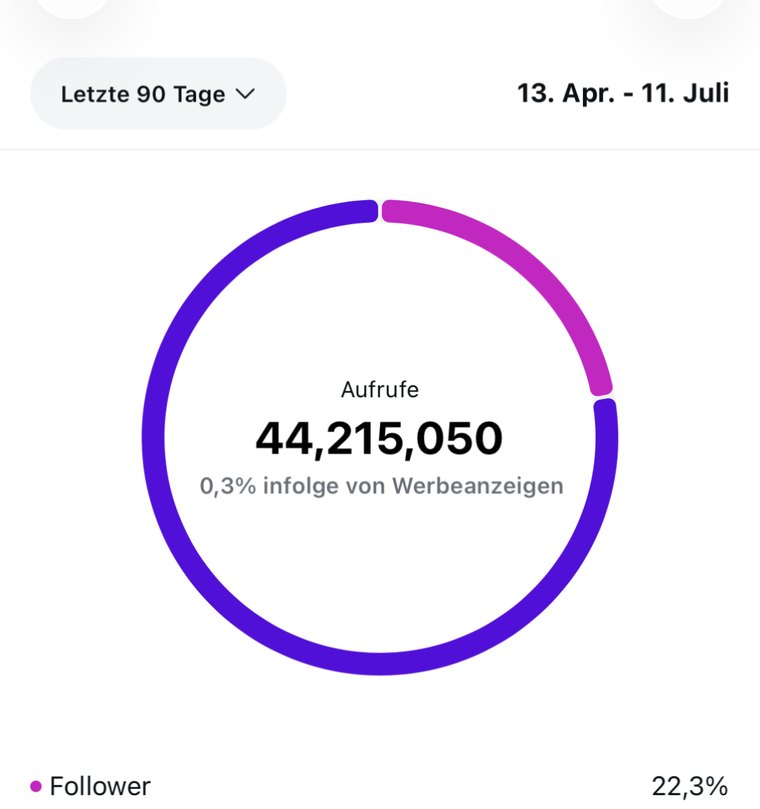
And because there are real people behind the numbers: that's us. Two totally normal guys who not long ago were still sitting at 340 views — and just didn't stop.
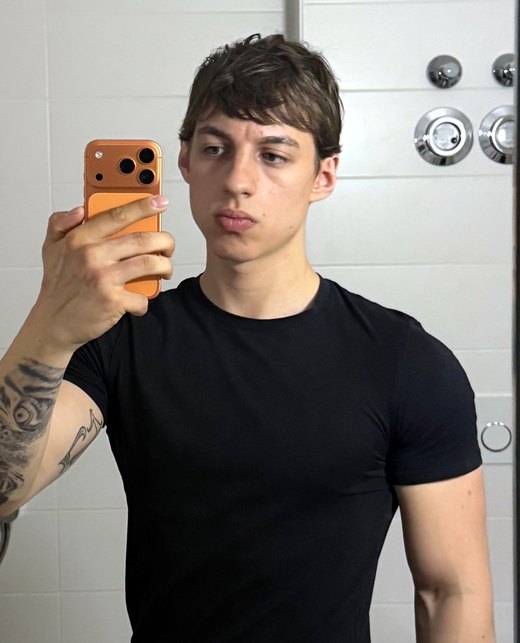
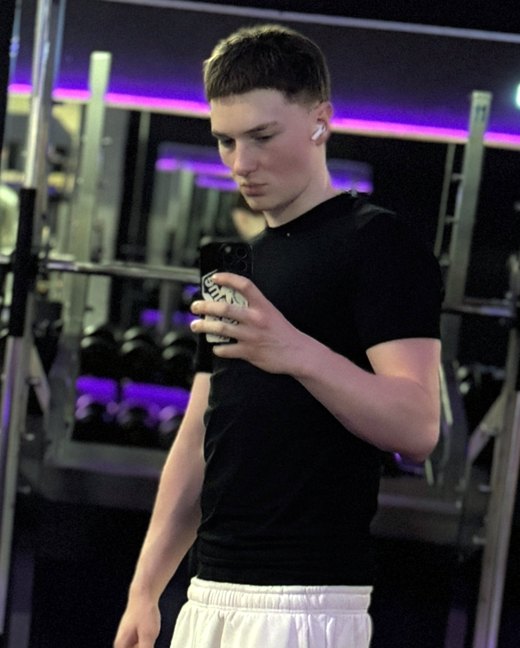
We started on 31.05.2024 — no audience, no guarantee, no plan B. What made the difference wasn't talent or luck. It was the decision to see every post as a lesson instead of a lottery ticket. 102M views later, you're now sitting here with exactly what we wished we'd had back then. So use it. See you on the For You page. — Noah & André